
Canada's best beer comes from British Columbia. I'm pretty confident of that. Some of my favourite Canadian breweries can be found there, like Superflux, Twin Sails and Boombox. The subject of this review is one of the latter's limited releases: Synthwave.
I missed this beer the first time it was brewed and released but managed to pick up a four-pack recently. I believe it was brewed in December 2019 so it's not 100% fresh but not old enough yet that a review would be inappropriate. Information on the brewery's website is sparse at best—this beer does not appear there at all. A rough grain bill is printed on the side of the can and I found a list of hops at the beer blog Bring Your Porter to the Slaughter.
This beer features a combination of Citra, Mosaic and Motueka hops. Citra and Mosaic are par for the course when it comes to contemporary IPAs, especially ones that are influenced by the hazy, fruit-forward beers popularized by certain New England breweries. Motueka is interesting, though. It is one of a handful of hops from New Zealand that have gained in popularity over the past five years. I've yet to brew with Motueka personally—but I have a half-pound in my freezer that I don't know what to do with yet so I've been purposely picking out beers that include them as of late.

Aroma: Smells deliciously like mangoes. There's alcohol too, which detracts from the overall effect.
Flavour: Grapefruit is king, with a touch of mango that matches the nose.
I missed this beer the first time it was brewed and released but managed to pick up a four-pack recently. I believe it was brewed in December 2019 so it's not 100% fresh but not old enough yet that a review would be inappropriate. Information on the brewery's website is sparse at best—this beer does not appear there at all. A rough grain bill is printed on the side of the can and I found a list of hops at the beer blog Bring Your Porter to the Slaughter.
This beer features a combination of Citra, Mosaic and Motueka hops. Citra and Mosaic are par for the course when it comes to contemporary IPAs, especially ones that are influenced by the hazy, fruit-forward beers popularized by certain New England breweries. Motueka is interesting, though. It is one of a handful of hops from New Zealand that have gained in popularity over the past five years. I've yet to brew with Motueka personally—but I have a half-pound in my freezer that I don't know what to do with yet so I've been purposely picking out beers that include them as of late.
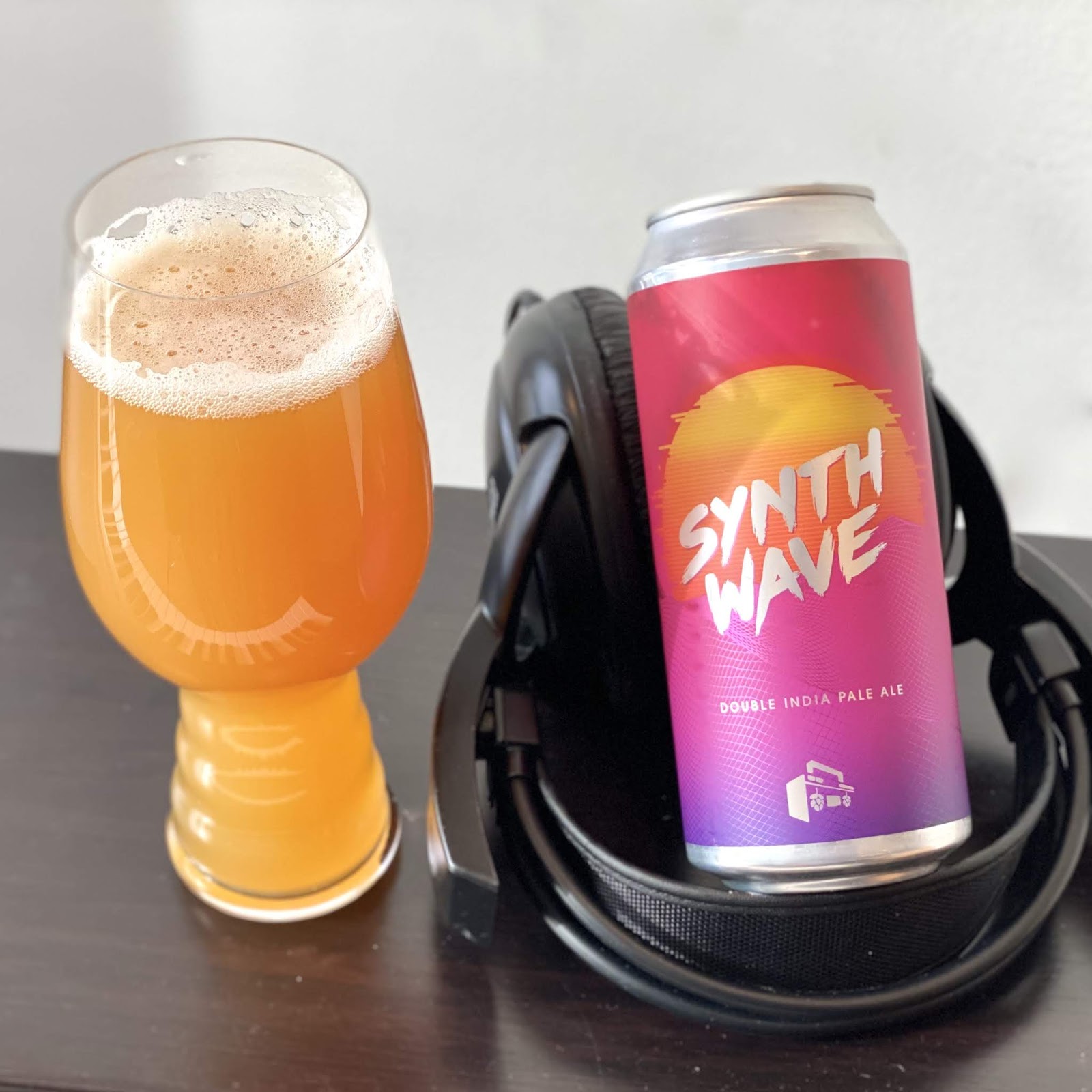
- Name: Synthwave
- Brewery: Boombox Brewing Company
- Style: Double IPA
- Alc/vol: 8.5%
- OG: Unknown
- FG: Unknown
- IBU: Unknown
- Malt: Unknown base malt, Flaked oats, Wheat
- Hops: Citra, Mosaic, Motueka.
- Yeast: Unknown
Aroma: Smells deliciously like mangoes. There's alcohol too, which detracts from the overall effect.
Flavour: Grapefruit is king, with a touch of mango that matches the nose.
Mouthfeel: Synthwave has a medium body, which is a little surprising given the higher alcohol content. I expect a little more heft from a double IPA, to be honest. It's coupled with a little more alcohol burn than I like—there are higher alcohol beers that go down more smoothly than this.
Overall: The best compliment you can give a higher alcohol beer is that it is still easy to drink—that you easily forget how strong it is because it is well-balanced and flavourful. This beer does not achieve that, unfortunately. From start to finish, you can't help but notice alcohol on the nose and on your tongue. It doesn't ruin the beer, but it definitely detracts from a very nice hop profile.
Rating: 3 out of 5.